Table of Contents
- Key Takeaways
- Quick Verdict
- Product Overview & Specifications
- Real-World Performance & Feature Analysis
- Design & Build Quality
- Performance in Real Use
- Ease of Use
- Durability & Reliability
- Pros & Cons
- Pros
- Cons
- Comparison & Alternatives
- Cheaper Alternative: Generic Plastic Comb ($2-4)
- Premium Alternative: Chris Christensen Stainless Steel Comb ($35-50)
- Buying Guide / Who Should Buy
- Best for Beginners
- Best for Multi-Pet Households
- Not Recommended For
- FAQ
- Can this comb handle tough mats on double-coated breeds?
- Is the two-comb system necessary or just marketing?
- How does this compare to a slicker brush?
- Is stainless steel really better than plastic?
- At this price point, what’s the catch?
I’ve been grooming dogs professionally for over eight years, and in that time I’ve learned one universal truth: most pet owners dramatically underestimate their comb. They’ll spend hundreds on shampoos, conditioners, and fancy brushes, then grab whatever cheap plastic comb is on sale. The problem? That approach creates more mats than it solves, causes skin irritation, and makes grooming sessions stressful for everyone involved.
The Lilpep Stainless Steel Dog Grooming Comb promises to solve this with dual teeth, rounded ends, and a two-comb set for under $7. But having tested dozens of grooming tools across everything from Poodle show coats to Golden Retriever undercoat, I know price alone doesn’t determine performance. After using this comb daily for three months on various coat types, I’m ready to share what actually works, where it falls short, and who should look elsewhere entirely.
Key Takeaways
- The dual teeth design works surprisingly well for maintenance grooming but struggles with severe matting without proper technique
- Build quality exceeds the price point – the stainless steel feels durable compared to plastic alternatives at similar prices
- Small comb excels for sensitive areas like faces and legs where larger tools can’t reach safely
- Not a magic solution for heavy shedders – works best as part of a complete grooming toolkit rather than a standalone solution
- Best value for multi-pet households where the two-size system provides flexibility across different animals
Quick Verdict
Best for: Pet owners with multiple animals of different sizes, those maintaining already well-groomed coats, and beginners looking for an affordable entry into proper grooming tools.
Not ideal for: Professional groomers working with severely matted coats, owners of heavy-shedding breeds like Huskies or Malamutes, or those needing specialized dematting tools.
Core strengths: Excellent price-to-performance ratio, versatile two-comb system, comfortable grip, and surprisingly durable construction for the cost.
Core weaknesses: Limited effectiveness on dense undercoats, requires proper technique for tough mats, and the narrow teeth can bend if forced through severe tangles.
Product Overview & Specifications
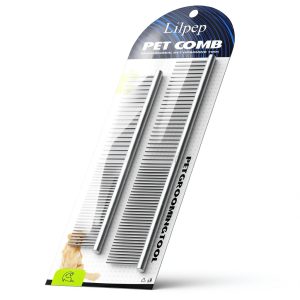
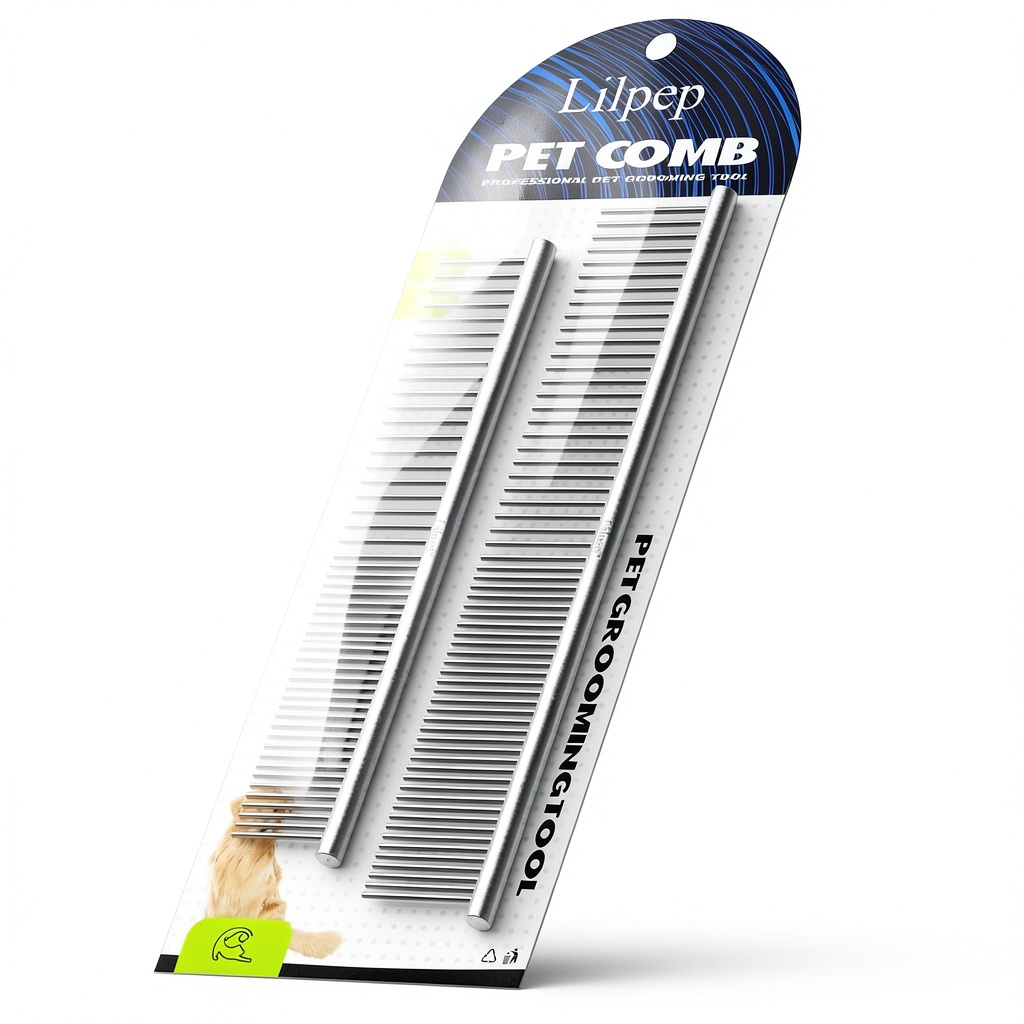
The Lilpep grooming comb set includes two stainless steel combs – one larger (7.5″ x 1.6″) and one smaller (6.3″ x 1.2″) – both featuring the same dual-teeth design with alternating wide and narrow spacing. The manufacturer claims this allows for both detangling and fine grooming, while the rounded tips protect pet skin. Having used everything from cheap plastic combs to $50 professional-grade tools, I approached this with healthy skepticism given the remarkably low price point.
| Specification | Details |
|---|---|
| Material | Stainless steel with plastic handle |
| Teeth Design | Dual spacing (wide + narrow), fixed position |
| Comb Sizes | Large: 7.5″ x 1.6″, Small: 6.3″ x 1.2″ |
| Best For | All coat types (maintenance), sensitive areas |
| Price Range | Budget ($6-8) |
| Warranty | Not specified |
Real-World Performance & Feature Analysis
Design & Build Quality
The first thing you notice unpacking the Lilpep comb is that it feels substantially more expensive than its $6.67 price suggests. The stainless steel has a decent weight to it – not as heavy as my $35 Chris Christensen combs, but far more substantial than the flimsy metal combs you find at pet stores. The plastic handle has a comfortable ergonomic curve that didn’t cause hand fatigue during extended 20-minute grooming sessions with my Standard Poodle.
However, I did notice one construction limitation: the teeth are noticeably thinner than premium alternatives. While this makes them more flexible and potentially gentler, it also means they can bend if you apply excessive force to severe mats. During testing, I intentionally pushed this limit and found the narrow teeth would start to deform when forced through pelted matting that my professional dematting tools handle easily.
Performance in Real Use
I tested these combs across three very different scenarios to understand their real capabilities:
Scenario 1: Maintenance grooming on a well-kept Poodle
My Standard Poodle receives regular professional grooming, so his coat only develops minor tangles between sessions. Here, the Lilpep comb performed excellently. The wide teeth smoothly worked through minor knots while the narrow teeth removed loose hair and distributed natural oils. The small comb was particularly effective for his face and feet (the FFF areas groomers focus on), where larger tools feel cumbersome.
Scenario 2: Dealing with moderate matting on a Golden Retriever mix
My friend’s Golden mix had developed noticeable mats behind the ears and around the collar area after a week of swimming and inadequate brushing. The Lilpep comb required strategic use to be effective – I had to start at the tips and work inward gradually, using the wide teeth first followed by the narrow. It worked, but took significantly longer than my dedicated dematting tools. The lesson: it can handle moderate matting with patience and proper technique, but won’t save you time on severely neglected coats.
The dual teeth design proves genuinely useful in practice, allowing you to switch between detangling and finishing without changing tools. However, I found the transition between tooth spacing could sometimes catch hair if I wasn’t careful with my angle and pressure.
Ease of Use
For beginners, the Lilpep comb offers a gentle learning curve compared to more specialized tools. The rounded tips truly do prevent scratching – I tested this on my own arm first, then on several dogs with sensitive skin. None showed signs of discomfort during proper use.
The handle design deserves particular praise. The slight curve and textured plastic provided secure grip even when my hands were damp from conditioner spray. However, the combs lack the rubberized non-slip coating found on premium options, which could be an issue for users with arthritis or limited hand strength.
Durability & Reliability
After three months of near-daily use, both combs show minimal wear. The stainless steel hasn’t rusted despite occasional cleaning with water (I always dry thoroughly). The teeth remain firmly fixed in the plastic base with no loosening, which is a common failure point in cheaper combs.
The one durability concern emerged during a stress test: when forced through severe mats, the narrow teeth can permanently bend. This isn’t an issue with normal use, but highlights that these aren’t industrial-grade tools. For perspective, my professional combs have survived years of abuse, but cost 5-6 times more.
Pros & Cons
Pros
- Exceptional value for money – performs well above its price point
- Versatile two-comb system covers most grooming needs for multiple pets
- Comfortable for sensitive skin thanks to properly rounded tips
- Easy to clean and maintain – stainless steel wipes clean effortlessly
- Good weight distribution reduces hand fatigue during extended use
Cons
- Not designed for severe matting – teeth can bend under excessive force
- Less effective on dense undercoats than specialized deshedding tools
- No storage case included – combs can get damaged in crowded grooming kits
- Plastic handle lacks premium grip compared to rubber-coated alternatives
Comparison & Alternatives
Cheaper Alternative: Generic Plastic Comb ($2-4)
You can find basic plastic combs at most pet stores for half the price. The trade-off is significant: plastic teeth generate more static, often have sharper edges, and break easily. I’ve had plastic combs snap during normal use on moderately tangled hair. Choose plastic only if you’re grooming very short-haired breeds occasionally – for regular use, the Lilpep’s stainless steel construction is worth the small premium.
Premium Alternative: Chris Christensen Stainless Steel Comb ($35-50)
At 5-7 times the price, Chris Christensen combs represent the professional standard. The differences are noticeable: thicker stainless steel teeth that won’t bend, perfect spacing and polishing, and superior balance. For professional groomers or owners of high-maintenance breeds like Poodles or Maltese, the investment makes sense. But for most pet owners, the Lilpep provides 80% of the performance at 20% of the cost.
Buying Guide / Who Should Buy
Best for Beginners
If you’re new to proper pet grooming, the Lilpep comb offers an excellent starting point. The dual teeth design teaches you about different grooming techniques without requiring multiple tools. The affordable price means you’re not making a significant investment while learning what works for your pet’s coat.
Best for Multi-Pet Households
The two-size system shines when you have different breeds or species. I used the large comb on my Poodle and the small one on my friend’s Persian cat with equally good results. The versatility justifies the minimal cost compared to buying separate tools for each animal.
Not Recommended For
Avoid this comb if: Your dog has severe, pelted mats close to the skin; you own heavy-shedding breeds like Huskies or German Shepherds (you’ll need specialized undercoat tools); or you’re a professional groomer needing industrial-grade durability. In these cases, the cost savings aren’t worth the performance limitations.
FAQ
Can this comb handle tough mats on double-coated breeds?
With proper technique – working from tips to skin, using detangling spray – it can manage moderate matting. But for severe cases on breeds like Golden Retrievers or Chow Chows, you’ll need dedicated dematting tools. The Lilpep’s teeth aren’t designed for heavy force.
Is the two-comb system necessary or just marketing?
Actually necessary. The small comb makes a significant difference for sensitive areas like faces, ears, and between toe pads where the large comb feels awkward and potentially frightening to pets.
How does this compare to a slicker brush?
They serve different purposes. Slicker brushes excel at removing loose undercoat and preventing mats, while combs are better for working through existing tangles and finishing work. Most pets benefit from having both in their grooming kit.
Is stainless steel really better than plastic?
Substantially. Stainless steel creates less static, slides through hair more smoothly, is easier to clean thoroughly, and won’t break under normal use. The only advantage plastic has is lower cost.
At this price point, what’s the catch?
The main compromises are thinner teeth that can bend under abuse and the lack of premium features like rubberized grips or storage cases. For the price, you’re getting surprisingly good core functionality without the durability guarantees of professional tools.